

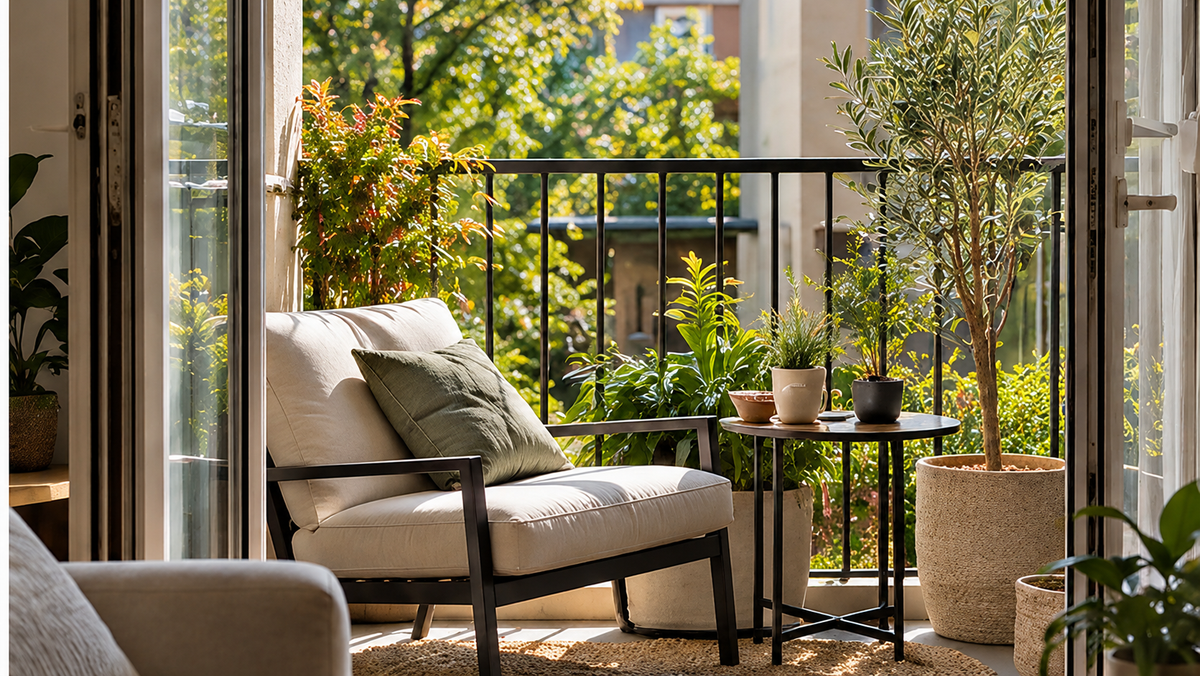
The outside part of a home is often treated as an extra: somewhere to keep a drying rack, a spare chair or boxes that have not found another place. But a few thoughtful indoor outdoor living ideas can turn a balcony, terrace or garden into somewhere you genuinely enjoy being. The point is not to create a second living room outdoors. It is to give the space a role in the life you already lead.
At HOMAVO, “inside and out” is about how home works as a whole. A cup of coffee might begin in the kitchen and finish on the balcony. A conversation may move from the sofa to the terrace. A quiet hour with a book might feel better outside when the weather allows. The furnishings should make those moments possible without making either space harder to use.
Quick answer: For connected indoor outdoor living, decide what you want to do outside, measure the full space and choose furniture that suits that activity. Keep doors and walking routes clear, consider wind and rain, and plan where cushions and accessories will go when not in use. A single practical chair can be a better start than a large set that leaves no room to move.
Indoor outdoor living ideas start with one real activity
Before thinking about matching color palettes, ask what you will actually do outside. Perhaps you want somewhere for a quiet coffee, a reading corner, two seats for conversation or room for weekend meals. Different uses need different furniture. A compact balcony may need one comfortable chair and a small surface; a generous terrace could accommodate a seating group and a route between areas.
Avoid planning around the most elaborate possible occasion if you mostly want ten minutes of fresh air on weekdays. Start with the ordinary activity that makes the space worth using. That approach is the same one we explain in our wider functional home design guide: the routine comes first, the furniture follows.
Measure the outdoor area before choosing furniture
Outdoor product photos can make furniture appear smaller than it is. Record the full width and depth of the usable area, including door swings, railings, drains and any existing planters. Measure the furniture not only when closed but also when reclined, pulled away from a table or configured for conversation.
Our TY01 Adjustable Rattan Recliner with Built-In Side Table is listed as approximately 55 × 72 × 108 cm when seated and 55 × 160 × 73 cm when reclined. That difference matters: the chair may fit in the upright position but require much more length when someone actually relaxes. It also lists a built-in fold-out side table, which may reduce the need for a separate small table in some layouts.
By contrast, our Outdoor Patio Sofa Sets are intended for a more generous outdoor setting. The product listing includes different outdoor seating configurations, including a seven-piece arrangement with a table, storage and a protective cover. Do not recommend a full outdoor lounge set for a tiny balcony without calculating the actual arrangement and clearances first.
Make the transition from indoors feel natural
Continuity can be simple. You might repeat a warm wood tone, choose outdoor cushions that echo the interior palette or use a similar style of lighting at the doorway. The furniture does not have to match perfectly. What matters more is that opening the door feels inviting and the route outside is unobstructed.
If the balcony is visible from your living room, keep the first sightline thoughtful: one useful seat, a few plants if appropriate and enough open space for the area to breathe. When an interior is already compact, resist storing excess furniture immediately outside the window. The outdoor space should extend your options rather than become an overflow cupboard.
Choose materials and care habits for the real conditions
Sun, rain, wind and seasonal temperature changes can make an outdoor setup very different from an indoor one. Read material descriptions, use care instructions for the actual product and understand what the manufacturer means by water resistance or weather resistance. Do not assume every cushion or furniture component should remain exposed continuously in all conditions.
Consider where you will keep cushions during extended bad weather and how you will clean surfaces after pollen or dust collects. For higher balconies, pay particular attention to wind exposure and avoid unsecured lightweight items that could fall. Check any landlord or building rules, and do not overload a balcony or block emergency routes. If you are uncertain about structural load limits, ask the building owner or a qualified professional rather than estimating from the furniture's appearance.
Create a useful arrangement for smaller spaces
A small balcony can still have a clear purpose. One reclining chair may create a reading corner if there is sufficient room for the extended position. Two compact seats might serve a couple who enjoy evening conversations. A narrow table may help for drinks or snacks, but only if it does not block the entrance or make the seating difficult to use.
The best outdoor arrangement is often the one you can use spontaneously. If every visit requires moving three planters and unfolding a chair into the doorway, you will probably use the space less often. Choose furniture and storage that make a quick break outside easy.
Let the inside and outside support one another
An outdoor area can give the living room a different mood without demanding a renovation. A reading chair may move the quietest activity outside on a pleasant day, leaving more room for conversation indoors. A terrace may become the place for gathering when the weather is right, while a flexible living room remains comfortable the rest of the year.
If your interior is compact too, our small living room ideas guide can help you arrange seating and storage without crowding the space. If your apartment also serves as a workplace, read our small home office guide for another example of choosing furniture around daily activity.
At HOMAVO, the idea is simple: live better inside and out by making each available space more useful, welcoming and genuinely yours. You do not need a vast garden to begin. You need a reason to step outside and enough room to enjoy it.
